
Classic Blackjack
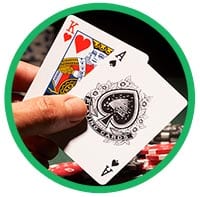
Classic blackjack remains the most popular version among US players at offshore online casinos. Its simple rules combined with strategic opportunities attract both beginners and experienced players who seek options beyond state-regulated markets.
This page explains the detailed rules and strategies for single-deck and multi-deck games. It also recommends offshore casinos with verified current bonuses and provides an analysis of RTP, house edge, and betting limits. Free strategy charts are included for quick use, along with tips for responsible play by US players over 21.
What is classic blackjack?
Classic blackjack challenges players to reach 21 without exceeding it, beating the dealer’s hand. Also called traditional 21, it uses standard card values: numbered cards match their face, face cards count as 10, and aces as 1 or 11.
Games use 1 to 8 decks, influencing strategy. Most classic versions have the dealer stand on soft 17, benefiting players by curbing dealer aggression. The house edge starts at 0.5% to 1% without strategy, dropping below 0.5% with optimal play.
Tension builds through choices like hit, stand, double, or split. This foundation supports variations at offshore tables. Mastering scoring and rules builds confidence for real stakes.
Where can I play classic blackjack?
US players can access classic games at the licensed offshore casinos featured at https://blackjack.legal/, which accept players from all 50 states. These hold licenses from Curaçao eGaming or similar, promoting fair play and secure payments.
Federal laws focus on operators, not individuals, enabling unrestricted access. Offshore sites offer RNG and live dealer formats without state barriers. They surpass limited regulated options in library size and promotions.
When it comes to playing online, sticking with established platforms makes a big difference. These sites tend to be more reliable, with smoother gameplay, faster payouts, and better overall support. For US players, both crypto and card deposits are widely accepted and usually work without much hassle.
Another advantage is the variety. Larger platforms typically offer bigger bonuses and a wider selection of tables, making them a great choice whether you prefer classic games or newer variants.
Top Offshore Casinos for Classic Blackjack (US Players Welcome)
Top offshore casinos stand out by offering a wide range of classic blackjack variations, along with up-to-date bonuses and full accessibility for US players. Whether you’re on desktop or mobile, most platforms support instant play with no downloads required.
Payments are also straightforward, with options like Bitcoin and Visa widely accepted for quick deposits. When it comes to bonuses, blackjack typically contributes around 10% to 20% toward wagering requirements, so it’s important to keep that in mind when planning your play.
| Site Name | Welcome Bonus | U.S. | Visit Site |
|---|---|---|---|
 | 100% Max $3,000 |  | PLAY NOWSite Review |
 | 200% Max $3,000 | | PLAY NOW |
 | 350% Max $2,000 | | PLAY NOW |
 | 100% Max $3,000 | | PLAY NOW |
Note: Table games often contribute less to wagering requirements established in the bonus terms. Always check the requirements before accepting a bonus.
Common Variations of Classic Blackjack
Classic is the foundation for most 21 games, but offshore casinos often tweak it by varying deck counts and rules. Single-deck versions tend to offer the lowest house edge, making them especially appealing for strategy-focused players.
Multi-deck games, on the other hand, are more common and closely resemble what you’d find in land-based casinos. They provide a familiar, consistent experience, which many players prefer for comfort and ease of play.
Deck Count Differences
Single-deck uses just 52 cards, which creates more predictable patterns and slightly better odds for players. Because there are fewer cards in play, strategy can feel more precise, but it also means more frequent shuffling, which can interrupt rhythm and require quick adjustments.
Multi-deck games, usually ranging from 4 to 8 decks, are more common and tend to move faster. The larger card pool smooths out distribution, making outcomes feel more consistent over time. While a few strategy tweaks come into play, the core principles of blackjack still apply across both formats.
Table Limits and Betting Flexibility
Table limits can vary widely, from $1 minimums for low-stakes play to $10,000 or more for high rollers. Most offshore platforms make it easy to sort tables by limits, so you can quickly find something that fits your bankroll and comfort level.
On top of that, small rule differences, such as whether late surrender is allowed or whether the dealer hits or stands on soft 17, add an extra layer of strategy.
Rule Tweaks
Some tables allow you to double down after splitting, which can give players a slight edge and open up more profitable opportunities. Others place limits on how many times you can resplit pairs, which can affect your overall strategy. Because these small rule differences matter, it’s always worth checking the table details before you start playing.
How to play
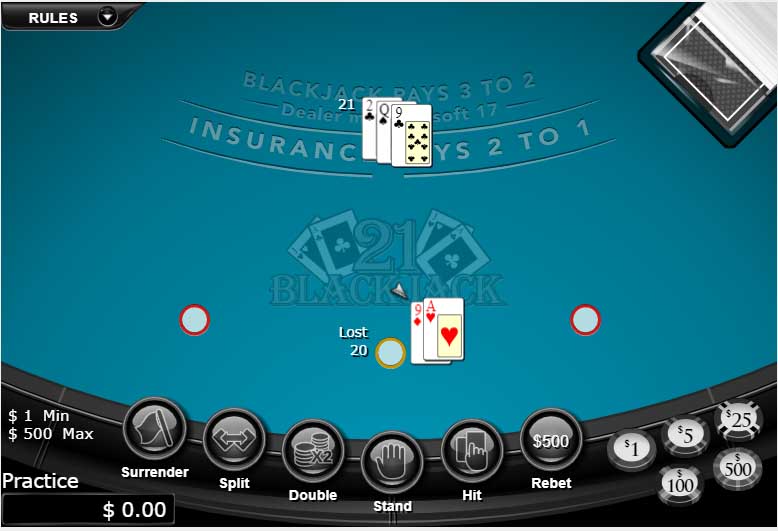
Each round starts with your bet. You’re dealt two face-up cards, while the dealer gets one face-up card and one hidden card. From there, your decisions are based on your total versus the dealer’s upcard, and once all players act, the dealer completes their hand according to fixed rules.
You’ve got several options to work with. You can hit to take another card, stand to hold your total, double down to increase your bet for one final card, or split pairs into two separate hands. Some tables also offer surrender, letting you fold early and recover half your bet. A natural blackjack, meaning an Ace and a 10-value card, typically pays 3:2. Insurance is offered when the dealer shows an Ace and pays 2:1, but it generally favors the house.
The flow is simple once you get used to it. Players act first, then the dealer finishes the hand and payouts are settled. After a few rounds, the rhythm becomes second nature.
If you’re new or refining your approach, free play modes are a great way to practice without risk. Pair that with basic strategy charts, and you’ll start making more consistent, optimal decisions. The online format makes it easy to apply all of this, whether you’re playing on desktop or mobile.
Single-Deck Strategy (Dealer Stands on Soft 17)
Single-deck blackjack offers some of the best odds in the game, with the house edge dropping to around 0.17% when you follow strategy perfectly. That’s why precision really matters here.
The tables below are designed to give you quick, at-a-glance decisions for every situation. Instead of relying on instinct, stick to these guidelines consistently to get the best possible results over time.
Hit Decisions
| Your Hand | Dealer Upcard |
|---|---|
| Pairs of 2’s | 8-A |
| Pairs of 3’s | 9-A |
| Pairs of 4’s | 2-3, 7-A |
| Pairs of 5’s | 10-A |
| Pairs of 6’s | 8-A |
| Pairs of 7’s | 9, A |
| A,2-A,5 | 2-3, 7-A |
| A,6 | 7-A |
| A,7 | 9-10 |
| 5-7 | Any |
| 8 | 2-4, 7-A |
| 9 | 7-A |
| 10 | 10-A |
| 12 | 2-3, 7-A |
| 13-15 | 7-A |
| 16 | 7-9 |
Stand Decisions
| Your Hand | Dealer Upcard |
|---|---|
| Pairs of 9’s | 7, 10-A |
| Pairs of 10’s | Any |
| A,7 | 2, 7-8, A |
| A,8 | All except 6 |
| A,9-A,10 | Any |
| 12 | 4-6 |
| 13-16 | 2-6 |
| 17+ | Any |
Split Pairs Decisions
| Your Hand | Dealer Upcard |
|---|---|
| Pairs of 2’s | 2-7 |
| Pairs of 3’s | 2-8 |
| Pairs of 4’s | 4-6 |
| Pairs of 6’s | 2-7 |
| Pairs of 7’s | 2-8 |
| Pairs of 8’s | Any |
| Pairs of 9’s | 2-6, 8-9 |
| Pairs of A’s | Any |
Double Down Decisions
| Your Hand | Dealer Upcard | Fallback |
|---|---|---|
| Pairs of 5’s | 2-7 | Hit |
| A,2-A,5 | 4-6 | Hit |
| A,6 | 2-6 | Hit |
| A,7 | 3-6 | Stand |
| A,8 | 6 | Stand |
| 8 | 5-6 | Hit |
| 9 | 2-6 | Hit |
| 10 | 2-9 | Hit |
| 11 | Any | Hit |
Surrender and Insurance
Surrender can be a useful tool when used selectively. For example, surrendering a hard 16 against a dealer 10 or Ace can help cut your losses in tough spots. Outside of those situations, it’s usually better to play the hand out. With pairs like 7s, you’ll typically stand against weaker dealer cards and only consider surrender in the toughest matchups.
Insurance, on the other hand, is best avoided in most cases. While it might feel like a safety net, the math doesn’t support it, and the house holds a clear long-term advantage.
Multi-Deck Strategy (Dealer Stands on Soft 17)
Multi-deck 21 is the most common format at offshore casinos, mainly because it keeps the game moving smoothly and balances card distribution. When the dealer stands on soft 17, the house edge can stay around 0.46% with proper strategy.
The key here is consistency. Using strategy charts tailored to multi-deck, stand-on-soft-17 rules will help you make precise decisions every time. Over the long run, sticking to those charts is what keeps the edge low and your results steady.
Hit Decisions
| Your Hand | Dealer Upcard |
|---|---|
| Pairs of 2’s, 3’s | 8-A |
| Pairs of 4’s | 2-4, 7-A |
| A,2-A,3 | 2-4, 7-A |
| A,4-A,5 | 2-3, 7-A |
| 5-8 | Any |
| 9 | 2, 7-A |
| 10 | 10-A |
| 11 | A |
| 12 | 2-3, 7-A |
| 13-16 | 7-A |
Stand Decisions
| Your Hand | Dealer Upcard |
|---|---|
| Pairs of 9’s | 7, 10-A |
| Pairs of 10’s | Any |
| A,7 | 2, 7-8 |
| A,8-A,10 | Any |
| 12 | 4-6 |
| 13-16 | 2-6 |
| 17+ | Any |
Split Pairs Decisions
| Your Hand | Dealer Upcard |
|---|---|
| Pairs of 2’s, 3’s | 2-7 |
| Pairs of 4’s | 5-6 |
| Pairs of 6’s | 2-6 |
| Pairs of 7’s | 2-7 |
| Pairs of 8’s | Any |
| Pairs of 9’s | 2-9 except 7 |
| Pairs of A’s | Any |
Double Down Decisions
| Your Hand | Dealer Upcard | Fallback |
|---|---|---|
| Pairs of 5’s | 2-9 | Hit |
| A,2-A,3 | 5-6 | Hit |
| A,4-A,5 | 4-6 | Hit |
| A,6 | 3-6 | Hit |
| A,7 | 3-6 | Stand |
| 9 | 2-6 | Hit |
| 10 | 2-9 | Hit |
| 11 | 2-10 | Hit |
Surrender and Insurance
Surrender can help limit losses, but only in specific spots. For example, surrender a hard 15 against a dealer 10, and a hard 16 against 9 through Ace. Outside of those situations, you’re usually better off playing the hand. With a hard 17, you’ll typically stand unless you’re facing an Ace, where strategy may vary slightly by rules.
Insurance is almost always a pass. Even though it pays 2 to 1, the odds don’t favor you in the long run, so it’s best to decline it consistently.
Rules Summary
The objective is simple: beat the dealer by getting closer to 21 without going over, or let the dealer bust. Each round starts with your bet, followed by two cards to you and one visible card for the dealer.
Card values are straightforward. Aces can count as 1 or 11, face cards and tens are worth 10, and all other cards keep their number value. A natural blackjack pays 3 to 2, while ties return your bet.
The dealer follows fixed rules, hitting on totals below 17 and standing on 17 or higher. From there, outcomes are settled based on who has the better hand.
While side options like insurance may seem appealing, they tend to work against you over time. Surrender, when used correctly, can help manage risk. In the end, consistent, strategy-based decisions are what shape your results.
Classic 21 RTP and House Edge
When you play with solid basic strategy, blackjack offers some of the best odds in the casino. RTP can climb above 99%, with the house edge as low as 0.17% in single-deck games and around 0.5% to 0.65% in multi-deck games where the dealer stands on soft 17.
Skip the strategy, though, and that edge can quickly jump past 2%. That’s why consistency matters. Features like doubling after splits (DAS) can also tilt things slightly more in your favor, making certain tables more attractive than others.
With audited RNG systems matching real-world probabilities, 21 remains one of the most player-friendly options available.
Table Limits and Bet Sizes at Offshore Casinos
Offshore casinos cater to every type of player when it comes to table limits. You’ll find low-stakes tables starting around $1 to $100, mid-range options from $25 to $1,000, and high-limit tables going from $100 up to $10,000 or more.
Compared to slots, these lower minimums give you more hands for your money, which can help when working through bonuses or refining your strategy.
Crypto payments make it even easier to scale up, offering fast, low-fee transactions that suit both casual and high-stakes play. Live dealer tables generally mirror these limits, so you can switch between formats without changing your approach.
A good rule of thumb for bankroll management is to have at least 100 times your minimum bet. This helps you handle variance and stay in the game longer without risking everything on a short streak.
FAQs
What is the house edge in classic blackjack?
The house edge isn’t fixed—it depends on the rules, number of decks, and how well you play.
- Around 0.17% is possible in the best-case scenario, like single-deck games with favorable rules and perfect basic strategy
- Most players will see about 0.5% to 0.65% in standard multi-deck games (6–8 decks)
- It can climb above 1% in weaker rule sets, like 6:5 blackjack payouts or restricted doubling
The key takeaway is simple: blackjack only offers low house edge if you play correctly. Even small mistakes can push that edge up to 1%–2% or more over time.
How does classic blackjack differ from European Blackjack?
The main difference comes down to how the dealer handles their cards and how that affects risk.
In European blackjack, the dealer doesn’t take a second card until after all players have acted. That means if the dealer ends up with blackjack, you can lose extra money from doubles or splits that wouldn’t have been placed in the first place.
There are also a few common restrictions, like limited doubling options and fewer surrender opportunities.
In short, European 21 is slightly less favorable for players because of that delayed dealer check and tighter rules.
Are there classic blackjack live dealer games?
Yes, and they’re widely available.
Many online platforms offer live dealer games 24/7, with real dealers streaming from studios. You’ll typically find a mix of:
- Standard classic tables
- Speed blackjack for faster rounds
- VIP or high-limit tables
Just keep in mind that availability can depend on your location, and not all platforms operate under the same level of oversight.
Can I play real money classic blackjack on a mobile app?
Yes, though it depends on how you access it.
Most platforms use mobile-optimized websites, so you can play directly in your browser without downloading anything. In some regulated states, licensed apps also offer real-money 21.
Offshore sites support mobile play as well, but it’s important to choose carefully, since reliability can vary between platforms.
Can I free play classic blackjack?
Absolutely. Most online casinos offer demo or practice modes with no deposit required. It’s one of the best ways to:
- Learn basic strategy
- Try different rule variations
- Build confidence without risking money
If you’re serious about improving, spending time in free play before moving to real stakes is a smart move.
Responsible Gaming
Responsible gambling means treating the game as entertainment rather than a way to make money. Because 21 involves skill and strategy, it can be easy to feel in control, but the house edge still exists.
Set a clear budget before you play, stick to time limits, and avoid chasing losses or increasing bets after a losing streak. Using a basic strategy can improve your odds, but it doesn’t eliminate risk, so it’s important to stay disciplined and know when to walk away.