
European Blackjack – Rules, Tips, Strategy, and Differences
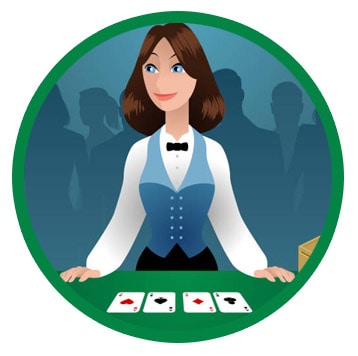
European 21 attracts US players interested in offshore casino games. This variant features unique dealer rules that require specific strategy adjustments. Understanding these differences can enhance your gameplay and potentially increase your winnings.
Players aged 18 and older can access European blackjack responsibly at licensed offshore platforms. The sites recommended at https://blackjack.legal/ operate legally outside US borders, allowing nationwide play without the restrictions found in domestic casinos.
This page explains the rules of European 21 and compares them to classic versions. It also provides you with verified strategies and highlights the top offshore casinos offering the European variant online.
What is European Blackjack?
European blackjack is a popular online variant favored by many players. The dealer receives only one face-up card at the start, unlike classic 21 where two cards are dealt immediately. Players complete their hands fully before the dealer draws a second card, known as the hole card.
This no-hole-card rule adds tension to decisions on insurance and doubles. Games typically use six decks of cards, shuffled together for each round in online formats. Live dealer versions mirror this setup but are streamed from physical casino studios.
Variations occasionally feature two, four, or eight decks, but six remains standard. Payouts follow classic 21 norms: 3:2 for blackjack, 1:1 for regular wins. Side bets appear rarely, keeping the focus on core play.
The objective remains simple: beat the dealer to 21 or get closer without busting. Practice modes help build familiarity before playing for real stakes.
Where Can I Play European Blackjack?
European 21 thrives at offshore sites open to US players nationwide. These platforms hold licenses from international regulators, ensuring that random number generators and fair outcomes are in place. Domestic US casinos rarely offer this variation due to regulated market limits.
Offshore operators provide secure environments with SSL encryption and fast payouts. They accept cryptocurrencies like Bitcoin for anonymous deposits, ideal for privacy-conscious players. Games often come from providers like RealTime Gaming and Rival, known for smooth European 21 tables.
Availability typically spans all states, with no geofencing required. Live dealer tables add immersion with real cards and chat features. Free demos let players test rules risk-free.
Top Online Casinos Offering European Blackjack Games In 2026
Offshore casinos lead in European 21 options for online players. They deliver multiple tables, high RTP versions, and player-friendly rules. Licensed operations guarantee transparency through third-party audits.
Current bonus offers enhance starting bankrolls, often matching deposits up to a substantial amount. However, 21 typically does not count as much towards wagering requirements as slots, as it is a game of skill. The platforms below are all licensed by trusted gaming regulators and feature intuitive interfaces for quick access to games.
| Site Name | Welcome Bonus | U.S. | Visit Site |
|---|---|---|---|
 | 100% Max $3,000 |  | PLAY NOWSite Review |
 | 200% Max $3,000 | | PLAY NOW |
 | 350% Max $2,000 | | PLAY NOW |
 | 100% Max $3,000 | | PLAY NOW |
Mobile Apps

Mobile play revolutionizes European blackjack for players at offshore sites. No dedicated apps are needed; web-based platforms load instantly via browsers. This nationwide access sidesteps state-specific regulations on regulated apps.
Sites are optimized for iOS Safari, Android Chrome, and tablets with HTML5 technology. Touchscreens handle splits, doubles, and hits intuitively. Graphics scale perfectly, from small phones to large pads.
European 21 rules transfer seamlessly to mobile, including six-deck standards. Live dealers streams without lag on stable connections.
Performance tips include using Wi-Fi and clearing the cache for peak speed. Tournaments and leaderboards add competition on the go. These platforms deliver desktop-quality experiences anywhere. Players report smooth play even on 4G networks.
Rule Differences Between European and Classic Blackjack
European 21 modifies classic rules to create unique dynamics for strategy. The dealer initially shows one upcard, then draws the hole card after the player’s actions. This eliminates early blackjack peeks, heightening insurance bet risks.
Insurance offers poor value without hole card visibility. Blackjack pays 3:2 standard, and doubling is allowed on any two cards at some tables. These elements combine for a house edge near 0.62% under an optimal strategy. Strategy charts adjust accordingly, emphasizing conservative doubles. US offshore casinos consistently apply these rules for fairness.
European vs. Classic Blackjack: Key Differences
| Feature | European | Classic |
|---|---|---|
| Dealer Initial Cards | One face-up (hole card after player turn) | Two cards (one up, one hole) |
| Surrender | Not allowed | Often allowed (late surrender) |
| Dealer on Soft 17 | Stands | Varies (hit or stand by casino) |
| Decks | Usually 6 | 1-8, varies |
| House Edge | ~0.62% with perfect strategy | ~0.5-1%, varies by rules |
| Insurance Impact | Higher risk without hole card | Safer with visible hole card |
The table shows strategy pivots, like avoiding insurance entirely.
European Blackjack Strategy
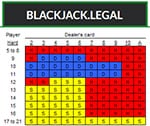
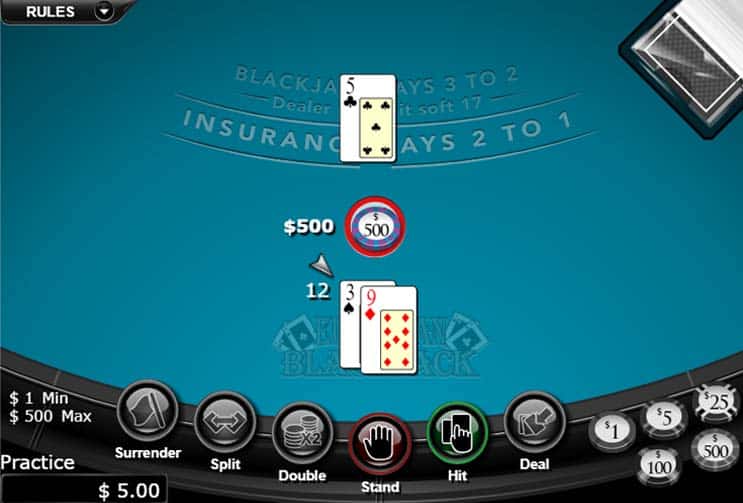 The optimal 21 strategy minimizes the house edge to about 0.62% in six-deck European blackjack. Decisions are based on the player’s total against the dealer’s upcard, accounting for no hole card and standing on soft 17.
Take advantage of free-play modes at our recommended casinos to build confidence and internalize optimal decisions. The categories below break down each move—study them until they become second nature before transitioning to real-money play. Even small deviations from basic strategy can reduce RTP, so consistency and precision are key.
When to Hit
- Hit pairs of 2s or 3s versus dealer 8 through Ace. These weak pairs need improvement against strong upcards.
- Hit pairs of 4s on dealer 2-4 or 7-Ace, avoiding stands on vulnerable totals. Pairs of 5s hit only on 10-Ace, as splits dominate elsewhere.
- Pairs of 6s, 7s hit on 7-Ace; 8s on 10-Ace. Aces hit versus dealer Ace to chase better hands.
- Hard 5-8 always hit. Hard 9 hits on 2 or 7-Ace. Hard 10-11 hit on 10-Ace; 12 on 2-3 or 7-Ace; 13-16 on 7-Ace.
- Soft 13-17 always hit; soft 18 on 9-Ace.
When to Stand
- Stand on pairs of 9s versus 7 or 10-Ace. All 10-value pairs stand strong.
- Hard 12 stands on 4-6. Hard 13-16 on 2-6. Hard 17-21 always stand.
- Soft 18 stands on 2-8; soft 19-21 always.
When to Split Pairs
- Split 2s or 3s on 2-7. 4s on 5-6. 6s on 2-6. 7s on 2-7.
- 8s on 2-9. 9s on 2-6 or 8-9. Aces on 2-10.
When to Double Down
- Double pairs of 5s on 2-9. Hard 9 on 3-6. Hard 10-11 on 2-9.
When to Use Insurance
- Skip insurance always. Win odds sit at roughly 30%, yielding negative expectation.
FAQs
Is free play available for European blackjack?
Yes, many of the listed casinos offer demo modes, allowing players to practice the rules and refine their strategy without making a deposit. It’s an ideal way to gain familiarity and confidence before moving into real-money play.
Do I need to know how to play classic blackjack?
A basic understanding certainly helps, but it’s not essential. The European variation builds on the same core “21” mechanics, making it easy for newcomers to pick up quickly. Even with minimal experience, most players can learn the game’s flow within a few rounds.
What is the main difference between European and classic 21?
In European blackjack, the dealer starts with only one visible card and does not receive a second (hole) card until after players have completed their hands. In Classic 21, the dealer is dealt both cards upfront, one face up and one face down, giving players more immediate information when making decisions.
Is European 21 better odds than classic blackjack?
The odds are broadly similar, with house edges typically ranging around 0.5%–0.6% under standard rules. The European no-hole-card format introduces slightly more risk, since players can lose additional bets to a dealer blackjack, but this is often offset by favorable rules like the dealer standing on soft 17. Overall, the difference in odds is minimal for most players.
Can I use the same strategy for European as classic blackjack?
Not exactly. While the core principles are similar, the European variant requires some adjustments due to the no-hole-card rule and the typical absence of surrender. These differences affect optimal decisions in certain situations, so it’s best to use strategy charts specifically designed for European blackjack.
Responsible Gambling & Compliance Notice
Must be 18+ to gamble. Offshore gambling accepts US players; no federal law targets individuals, but check state laws and always play responsibly. If gambling harms your life, seek help from NCPG or Gamblers Anonymous. Set limits and never chase losses.